


What Day Is It? (AKA: Time travel)

I’m back from an amazing trip overseas. That being said, I have lost all sense of time and I’m a bit jetlagged. So I forgot yesterday was Tuesday. I’m now pretending today is yesterday and getting the blog out. Speaking of time travel, do you know how old termites are? (and yes, all the pictures in this week's blog were taken by me on this trip!)


While I was in Kenya last week, in between inspections and other work, I had the privilege of going on safari with some absolutely amazing guides. It’s hard to ignore the mounds of dark red that dot the landscape in Samburu National Park. There were numerous times that we saw a “bump,” and it became a bit of a game called: is it an animal or a termite mound? More times than not, it was a termite mound!
While termites are a big threat in the southern US and in many other parts of the world, they aren’t always a threat on the savannah. It’s hard to imagine a wood destroying insect that causes so much damage world wide, not being a pest. But let’s back up a minute.

Termites are most closely related to cockroaches. No, not the pest cockroaches that invade homes, the wood and soil-dwelling cockroaches that are native to the outdoors. They go back 150 million years. That wood feeding behavior was an adaptation to a readily available food source. There were tons of trees and woody plants that would die, thereby providing a readily available food. Colony structure evolved, and they were able to form massive families. The bigger a colony is, the more food they can consume and the more protection they have. How they build their mounds is an incredible process with almost unbelievable engineering. Today, I’m going to focus on their benefits and how that benefit turned them into a pest.
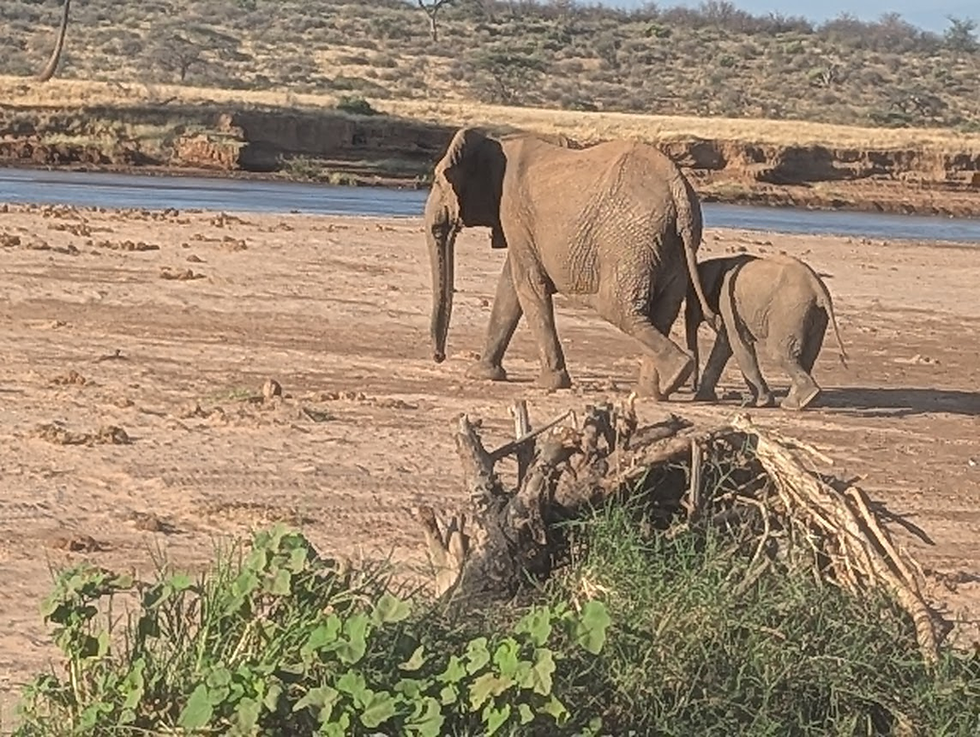
Many parts of Africa are exceptionally dry for at least part of the year. When trees die naturally or are pushed over by elephants, there is now a block of cellulose just sitting there. Without water or humidity, there is very little decomposition. If trees didn’t have some way of decomposing and returning those nutrients to the soil, the landscape would be a mess of dead woody plants littering the ground. Termites do the decomposition.
When people start building huts and houses that contain everything from straw to wood, termites are given a new food source. Instead of those trees dying naturally, humans are “killing” them and creating another food source for termites to exploit. The homes that the native people build need to be rebuilt every nine to ten years due to termite activity.

Then, termites are introduced into new environments through the movement of goods and people. These areas don’t need that service of decomposing the wood, and there are no natural predators to control their populations. Now those same beneficial insects become a pest that damages millions of structures every year. Estimates vary over how much termite damage and control costs, but it’s safe to say it’s probably billions of dollars every year. Then there is the actual money they eat!
This is typical for most of our pest species. They start out as beneficial organisms that are part of a healthy local ecosystem. Then they are transferred and introduced into areas where they are not native, and they start causing problems. This is a huge oversimplification, but you get the idea.

Entomologists study both the original native insects (even going back millions of years) to find what limits their populations and for ways to better understand their biology. (And we often take a break to stay hydrated with locally made Cokes!) This can lead to treatment protocols for them as pests. Knowing how a pest starts out in its evolutionary journey and how it has developed leads to better control. I keep up with the science so when you need help with your termite treatment plans, we can do that for you. Contact us.
Gratuitous hippo pic because hippos are THE BEST!!!

Lagniappe - here's some other ways termites are beneficial. And other ways. And yet more ways.


Comments