


Telling Tales (AKA: I've got puns)

You’ve read this blog and my articles before, so you know I like to have a little fun with these. It would be great to tell you how I got to this topic today, but it involves way too many open tabs, etymology, and a new article I was writing for PCT. It would take me longer to tell that story than write the blog. Let’s get into it.
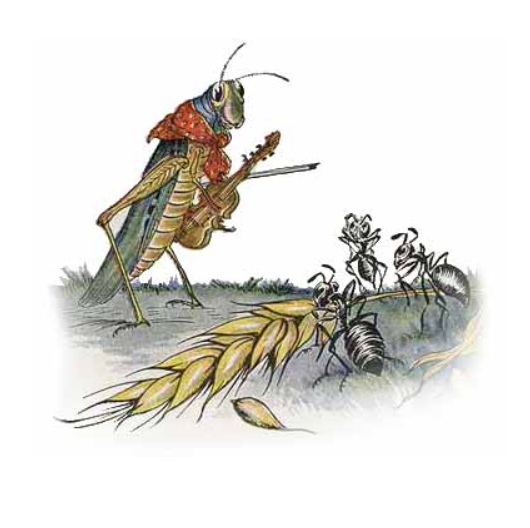
The ant and the grasshopper. If you don’t know the tale, there is a grasshopper, and there is an ant. You're up to date now.
The ant. You know me, I have a love/hate relationship with ants. They are amazing due to their behaviors and social structures. I hate them because I have such a problem with identifying them to species. They are my ID kryptonite. In the story, the ants are industrious and smart little girls. They have been thinking ahead and collecting food for the winter. Ants may not collect food specifically for winter, but they definitely are out foraging for food for themselves and their colony.

In the original Aesop’s, the ants are eating grain. There are some species of ants, like harvester ants and field ants, that like seeds and grains. Many other species have different diet preferences. Some are predators, and others have a sweet tooth. Then there are cool species that are farmers. Leafcutter ants don’t eat the leaves they harvest; they take them back to the nest to grow a fungus that they eat. Citronella and crazy ants have “herds” of aphids that they protect and feed off the honeydew they excrete.

This is why identification is so important. When we talk about control of ants, removing their food source is key to managing them. Of course, that is easier said than done. How do you remove all the leaves that leafcutter ants are cutting?!?! Some baits will work better on sweet loving ants vs protein guzzling species.

The ants and the grasshopper have a quick conversation. While ants don’t make sounds, they still communicate. Their pheromones are the chemical “chats” they have. Specific pheromones may set out a path to get to food. Some may say “danger” and call others to help protect the colony. This is how they manage the colony.
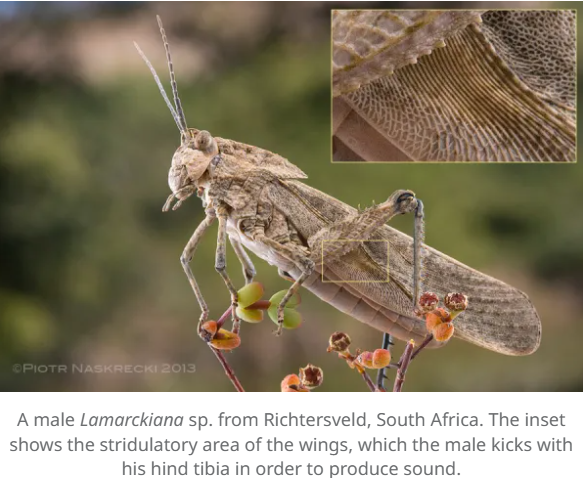
Now the grasshopper. This lazy sloth has spent the summer making music in the fable. While some grasshoppers make sounds, not all do. It’s more common to hear a cricket or a katydid. Grasshoppers that do produce noise, they rub their hind legs on their forewings. It’s called stridulation. It is a love song. Males make the noise to call to a female, like asking for a date. There are a few species that have females that make noise, but it’s not typical.

Back to the story, the grasshopper (who has wasted the whole summer making music) asks the ants to share their grain because he has not collected anything for the winter. First, the majority of species do not live through winter. They lay eggs in the autumn and then the adults die off. So the grasshopper in our story is either really optimistic or really confused.

Second, as their name suggests, they do eat a lot of grass. Man spevies are specific to vegetation. Some are omnivorous and will also feast on other insects. I’m not aware of any species that feed on dried grains or seeds. You have to feel a bit bad for our grasshopper in the tale because the ants laugh at him and won’t share their food. Typical ant behavior. (Not the laughing, the not sharing behavior.)
Chelle’s soapbox – locusts are a very specific species of grasshoppers that, when they sense overcrowding, they undergo a chemical change that changes their color, makes them feed more, and they breed faster. We do NOT have locust in the US.

We typically don’t have to control grasshoppers in urban pest control. Sure, a couple could enter a structure through an opening, but they don’t specifically forage inside, nor are they going to survive long indoors without their food. And grasshoppers don’t have social colonies like ants, so there won’t be hundreds or thousands of them trying to get to our food .
The moral of this story is that “there’s a time for work and a time for play”. It’s a balance. Just like pest control. We can’t always eliminate problems completely, but we can mitigate them. And just like pest control, we work hard at it, but we have fun with it too! If you want to add more balance to your job, I can take many tasks off your plate!

Lagniappe - Want to see how vicious ants are? Of course you do!
Urban pest consulting


Comments